
Why We Teach BIM Differently
BIM education should prepare people to contribute to projects—not only operate software
The Digital Construction Hub was built on a simple belief: digital construction professionals must understand how models, information, coordination, and decisions come together in project delivery.
The Shift
We Are Witnessing
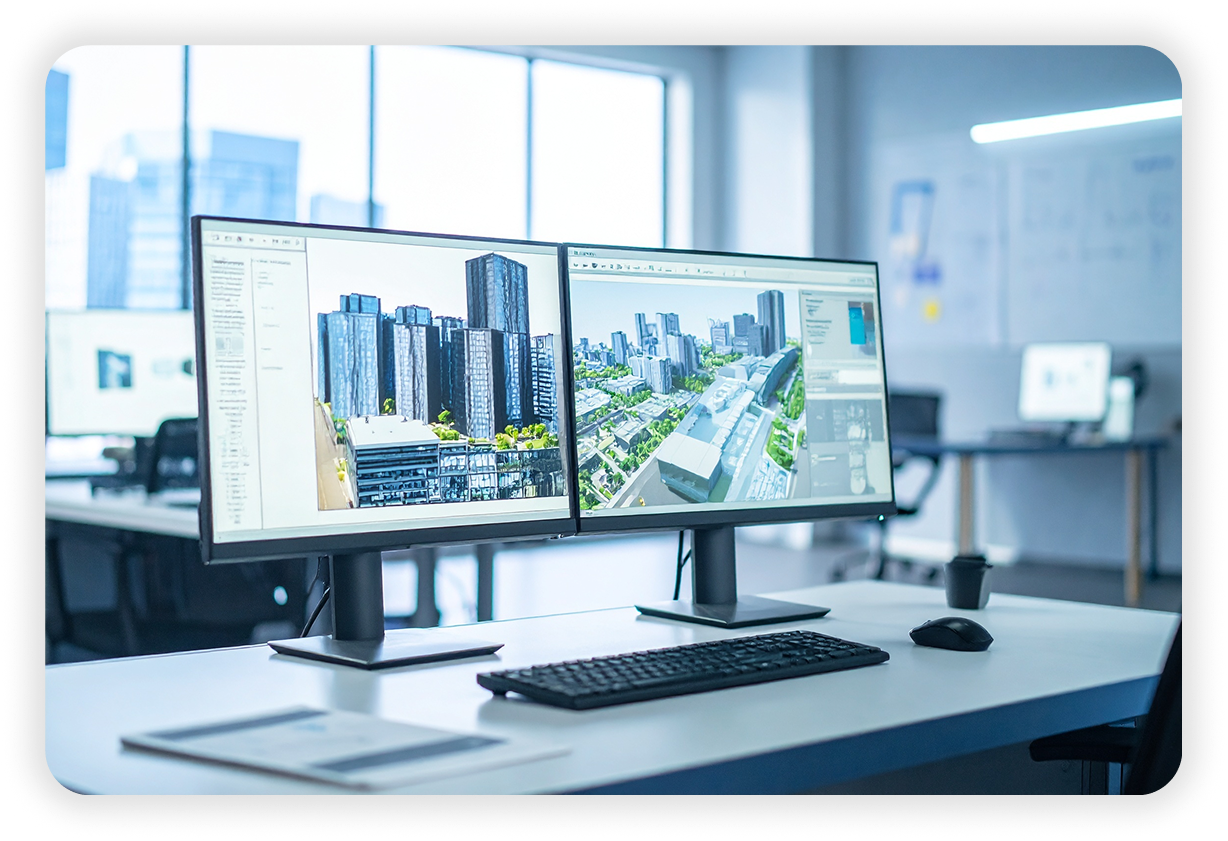
Construction is undergoing a quiet transformation. BIM is no longer confined to modeling teams. It now shapes how projects are coordinated, reviewed, and delivered. At the discipline level, models define systems and intent. Across teams, they guide coordination and quantities. On site, they support clarity before execution.
What begins as modeling now influences delivery. As digital workflows embed themselves into project environments, BIM/VDC awareness is no longer a niche specialization. It is steadily becoming a baseline professional literacy across the AEC industry. This shift is not about software. It is about how modern projects function.
The Industry Gap
While BIM adoption has expanded across the AEC industry, the depth of capability has not evolved at the same pace. Most professionals are introduced to BIM through tools and modeling workflows. Far fewer are trained to understand how their work affects constructability, coordination feasibility, and project delivery.
Models are created — but not always structured for cross-discipline reliability. Clashes are identified — but not always evaluated in terms of execution impact. Information is added — but not always aligned with quantities, sequencing, or downstream use.
As projects grow more complex, this gap becomes visible. Designs that appear complete may struggle under coordination pressure. Systems that look resolved may prove difficult to build. Information that exists in models may not be usable for planning, costing, or site execution.The issue is rarely effort or intelligence. It is a disconnect between modeling activity and delivery responsibility.For students, this creates uncertainty when entering real project environments. For professionals, it can slow growth and limit confidence. For industry leaders, it increases risk — because digital models must now support real decisions.The gap is not software proficiency. It is the ability to think in systems, anticipate interfaces, and model with execution in mind.
BIM adoption has expanded. Capability maturity has not.Many professionals are trained in tools. Far fewer are trained to understand how their work affects constructability, coordination feasibility, and delivery.Models may appear complete — yet struggle under coordination pressure. Systems may look resolved — yet prove difficult to build. Information may exist — yet remain unusable for planning or execution.The issue is not effort. It is the absence of systems thinking.For professionals, this creates uncertainty and slows growth. For leaders, it increases delivery risk.The gap is not technical skill. It is contextual understanding.And as digital workflows become central to project delivery, that gap becomes increasingly difficult to ignore.
WHAT BIM REALLY IS
BIM Is a Project Intelligence System
BIM is not just a digital model. It is a way of organizing project information so teams can understand, coordinate, validate, and deliver work more effectively.
When BIM is taught only as software, students may learn commands but miss the deeper purpose: how information supports decisions across the project lifecycle.
We believe BIM education must develop both technical capability and project thinking.
WHY TRAINING FALLS SHORT
Why Tool-First Learning Is Not Enough
A tool-first approach can help someone create geometry, but it rarely prepares them for project complexity.
Real projects require judgment, coordination awareness, information discipline, and the ability to understand how one model affects many teams.
What is often missing is clarity on how information is structured, how disciplines depend on each other, how coordination decisions are made, and how changes affect downstream work.
OUR PHILOSOPHY - We Teach BIM Through Project Delivery
Our approach begins with how projects actually work.
Students learn BIM through coordination, constructability, information flow, and delivery—because that is where BIM creates value.

Core Principles
Project Understanding — Know what you are modeling, why it matters, and how it affects the broader project.
Coordination Awareness — Understand how disciplines interact, where issues emerge, and how BIM supports alignment.
Information Discipline — Treat BIM as structured information that teams rely on—not only geometry.
Constructability Thinking — Look beyond visual completion and consider whether work can be coordinated, communicated, and built.
Professional Judgment — Explain decisions, identify risks, and contribute to project conversations.
TECHNOLOGY IN CONTEXT
Technology Should Support Thinking, Not Replace It
Digital tools are essential to modern construction, but tools alone do not create project-ready professionals.
The real value comes when technology supports coordination, communication, analysis, and delivery.
That is why we teach tools within workflows—not as isolated training.
What This Means for You
From Learner to Project Contributor
If you are entering the AEC industry, your growth will depend not only on what you can model — but on how well you understand coordination, dependencies, and delivery realities. If you are already working in projects, your long-term value will be shaped by your ability to operate confidently inside digital workflows — not just execute isolated tasks. And if you are leading teams, capability maturity is no longer optional. Digital environments demand professionals who understand systems, responsibility, and execution impact. This institute exists to prepare professionals for that reality.
Our goal is not to produce people who follow tutorials. Our goal is to develop professionals who can contribute inside BIM and digital delivery environments.
They learn to build with purpose, structure information clearly, communicate intent, respond to change, and present work with confidence.
For industry, this means professionals who understand context, support coordination, and produce information that others can trust.
WHY OUR PROGRAM IS STRUCTURED THIS WAY
Our Curriculum Follows the Logic of Projects
Capability is built through sequence, repetition, feedback, and application—not random topics.
The program progresses from foundation to discipline capability to integrated project application, mirroring how real work evolves.
OUR STANDARDWe Measure Learning by Project Readiness
Success is not defined by completing a model. It is defined by the ability to explain work, structure information clearly, support coordination, respond to change, and produce outputs that meet professional expectations.
Our standard is simple: Can this person contribute meaningfully to a project team?
FINAL MESSAGE
This Is Why The Digital Construction Hub Exists
We exist to close the gap between software training and project capability.
We teach BIM as a delivery discipline—where technology, information, coordination, and judgment come together to support construction outcomes.
For those who want to move beyond tools and build meaningful capability, this is the foundation.